

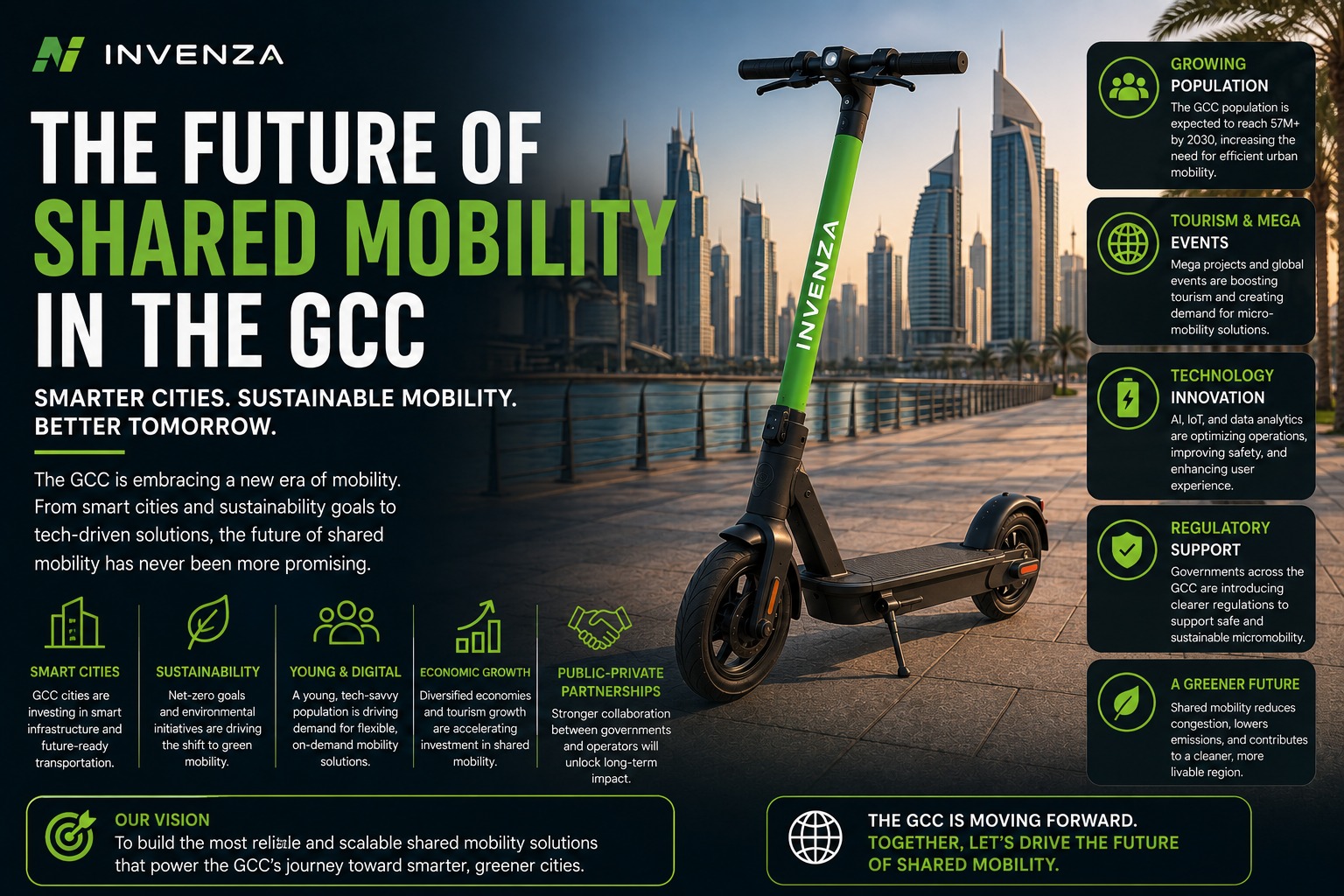
The GCC shared mobility market is rapidly evolving with initiatives like Qatar Vision 2030, Dubai Smart Mobility Strategy, and expanding transportation projects across Riyadh. From e-scooter sharing to smart fleet solutions, the region is creating new opportunities for mobility operators looking to scale and become part of the future of transportation.
The Gulf Cooperation Council — Qatar, UAE, Saudi Arabia, Bahrain, Kuwait, and Oman — is home to some of the most car-dependent urban environments on the planet. Cities were built around the automobile. Public transport is limited outside of Dubai and Doha’s newer metro systems. And yet, every major GCC government has embedded shared mobility and reduced car dependency into its long-term national vision.
This creates one of the most significant greenfield opportunities in global micromobility today.
The Policy Tailwind
Understanding why GCC governments are investing in shared mobility requires understanding the policy frameworks driving it:
- Qatar National Vision 2030 — explicitly targets sustainable transport, reduced private car dependency, and integrated mobility networks across Doha
- UAE Net Zero 2050 — includes electric mobility and shared transport as core pillars of the sustainability strategy
- Saudi Vision 2030 — targets 40% of Riyadh trips by public/shared transport by 2030 (currently under 5%)
- Dubai Urban Mobility Strategy 2030 — aims for 25% of all trips by autonomous and shared mobility by 2030
These are not aspirational statements. They are backed by government budgets, regulatory reforms, and infrastructure investment.
Market-by-Market Snapshot
Qatar
The most mature GCC micromobility market. The Lusail Smart City project has designated cycling and scooter infrastructure built in. Post-World Cup legacy infrastructure includes 300km of cycling paths planned across the country. Regulatory engagement with Ashghal (Public Works Authority) and Qatar Mobility Innovations Centre (QMIC) has been active since 2022. First-mover advantage still exists for serious operators.
UAE
Dubai is the most advanced. RTA (Roads and Transport Authority) has been running formal scooter licensing tenders since 2023. Abu Dhabi is developing its framework. The UAE market is larger than Qatar and has higher tourist traffic — a significant revenue driver. Competition will be stronger, but the market size justifies it.
Saudi Arabia
The largest GCC market by population and the most nascent for micromobility. NEOM, the LINE, and Red Sea project all include integrated shared mobility from inception. Riyadh is the near-term focus — the General Authority for Statistics estimates over 1.2 million daily car trips that could shift modally. Regulatory frameworks are being developed now.
300km Cycling paths planned in Qatar
1.2M Daily Riyadh trips to shift modally
2030 Target year for all GCC mobility visions
The Unique Challenges of GCC Deployment
The GCC opportunity is real — but it comes with specific operational challenges that differ from European or North American markets:
- Extreme heat — summer temperatures above 45°C dramatically reduce battery range and require more frequent maintenance
- Car culture — rider education and habit formation takes longer than in cities with existing cycling culture
- Expat population diversity — multi-language support and culturally aware UX design is essential, not optional
- Ramadan and seasonal patterns — demand shifts dramatically during Ramadan and summer months require different fleet and pricing strategies
- Limited pedestrian infrastructure — many areas lack the pavement quality and density needed for last-mile scooter use
Who Will Win the GCC Market?
Based on what we’ve seen in Qatar and the conversations we’ve had across the region, the operators who will succeed in GCC markets are those who:
- Engage regulators early and position as infrastructure partners, not tech disruptors
- Build Arabic-first rider experiences — not English apps with Arabic translations bolted on
- Support local payment methods including cash agents and regional gateways
- Adapt operations for seasonal patterns — summer downtime planning, Ramadan fleet strategies
- Build local teams with genuine market knowledge rather than deploying a global playbook
“The GCC is not a difficult market for micromobility. It is a different market. Operators who treat it as a copy-paste of their European model will struggle. Those who adapt will find significant opportunity.”
The Window Is Open — But Not Forever
Regulatory frameworks across the GCC will formalise over the next 18–36 months. Once formal licensing and tender processes are in place, the cost of entry rises significantly. Operators who establish presence, build regulatory relationships, and accumulate operational data now will be extremely well positioned when those processes begin. Those who wait for the rules to be finalised will be competing against established incumbents.
The GCC micromobility market is not a future opportunity. It is a present one — for operators prepared to move now.