

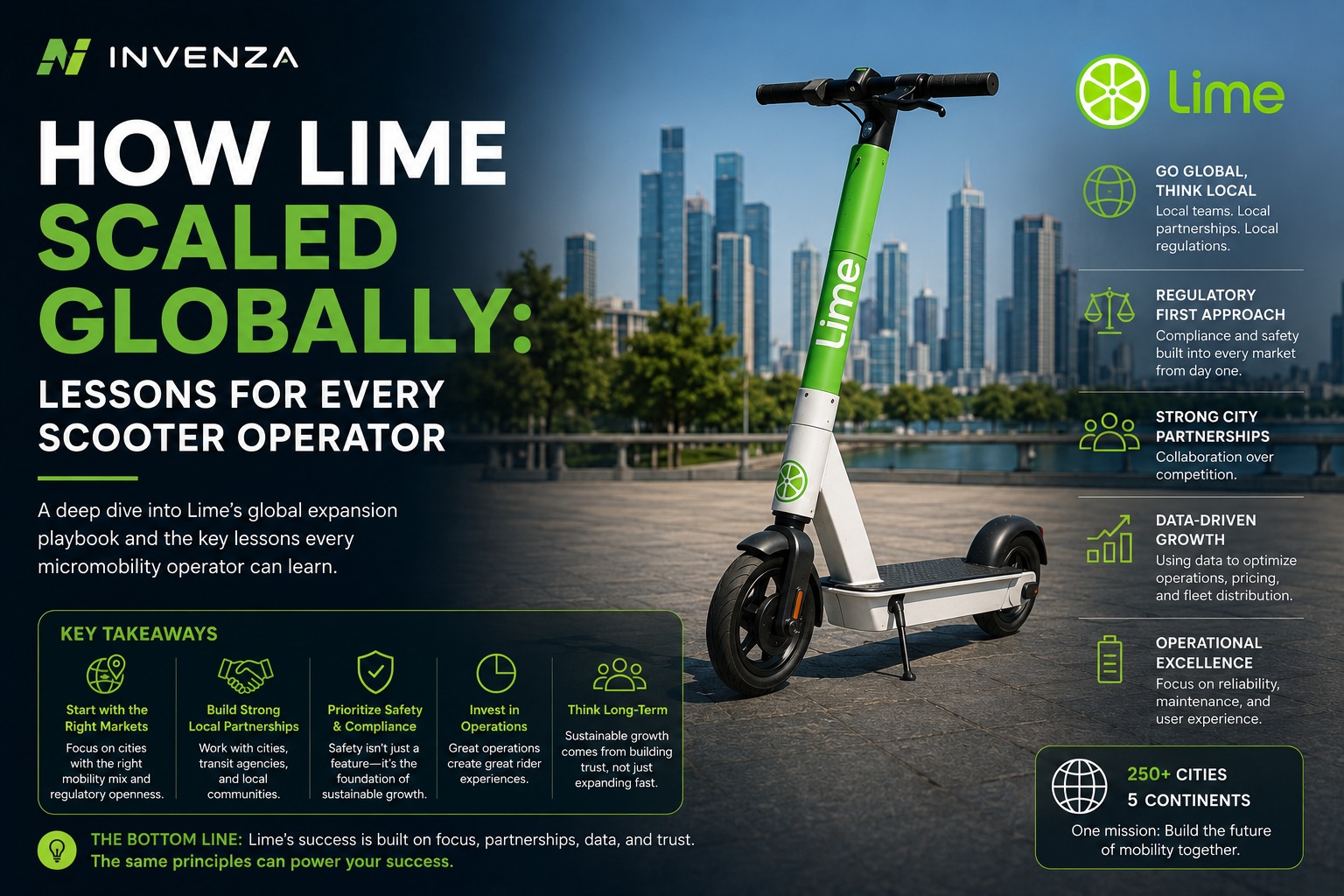
Lime is the world’s largest e-scooter operator by rides. Their path to global scale involved over $1 billion in funding, city bans, a pandemic pivot, and eventually — profitability.
Lime was founded in 2017 as LimeBike, initially offering dockless bike sharing before pivoting to electric scooters. By 2024, Lime had completed over 400 million rides across 280+ cities in 30 countries. It is the only major shared micromobility operator that has reached sustained profitability. That journey offers the clearest roadmap available for what it actually takes to build a durable micromobility business.
The Early Aggression Phase (2017–2019)
Like Bird, Lime’s early strategy was expansion at speed. They raised aggressively — over $467 million in a single Series D round in 2019 — and deployed scooters in cities before formal regulatory frameworks existed. The difference was that Lime simultaneously built a larger, more sophisticated regulatory affairs team than any competitor.
400M+ Rides completed globally
280+ Cities in 30 countries
$1.5B+ Total funding raised
The Pivot That Saved Them: Hardware Quality
In 2019, after years of scooters lasting only 3–6 months in the field, Lime made a radical decision: they would build their own hardware. The Lime Gen 4 scooter (later Gen 4+) was designed for a three-year lifespan. It had swappable batteries, reinforced components, and remote diagnostics built in. The capex was enormous — but the unit economics transformed. A scooter that lasts 36 months instead of 6 months generates 6x the revenue per hardware dollar spent.
COVID and the Forced Discipline
When the pandemic hit in 2020, Lime suspended operations in dozens of cities and laid off 13% of its workforce. This forced a discipline that perhaps should have come sooner: rigorous market-by-market profitability analysis. Lime exited markets where they couldn’t achieve positive unit economics and doubled down where they could.
“COVID forced us to run the business like a business, not like a growth-at-all-costs startup. In hindsight, it made us stronger.”
How Lime Reached Profitability
By 2023, Lime reported its first full year of profitability. The key drivers:
- Hardware lifespan improvement — Gen 4+ scooters dramatically reduced replacement costs
- Market selection discipline — exiting unprofitable cities and focusing on high-density, high-frequency markets
- Subscription products — Lime Prime monthly subscriptions increased revenue predictability and rider frequency
- Corporate partnerships — B2B contracts with universities, employers, and transit authorities provided stable revenue
- Government contracts — Many cities moved to formal tender processes; Lime won key contracts in Europe and North America
What This Means for You
Lime’s path to profitability was not glamorous. It involved painful exits, layoffs, and years of losses. But the destination — a profitable, growing global operator — validates the fundamental demand. For regional operators building in markets like the GCC, the lessons are actionable:
- Choose your market carefully — density and demographics drive unit economics
- Invest in hardware quality — cheap scooters are the most expensive long-term choice
- Build subscription and corporate revenue streams from early on
- Know when to exit a market — not every city will work