

A detailed analysis of Bird’s rise, franchise model experiment, financial collapse, and the practical lessons every micromobility founder can take away.
In 2017, Bird dropped scooters on the streets of Santa Monica, California, without permits, without warning, and without apology. It was one of the most disruptive product launches in tech history. Within 18 months, Bird was valued at $2 billion and operating in dozens of cities worldwide. By 2023, the company had filed for bankruptcy. The story of Bird is a masterclass in both the potential and the pitfalls of the micromobility business.
The Rise: Speed Over Everything
Bird’s early growth strategy was simple and aggressive: deploy fast, deal with regulators later, and use venture capital to fund losses while building scale. It worked — for a while. They were first to market in many US cities, which gave them brand recognition and the data advantage that comes with volume.
$2B Peak valuation (2019)
100+ Cities at peak
$750M+ Total funding raised
The Franchise Experiment
One of Bird’s most interesting strategic bets was the “Bird Platform” — a franchise model where local operators could license Bird’s technology and operate fleets under the Bird brand in smaller markets. This was genuinely innovative: it reduced Bird’s capex burden while expanding reach.
But it created a new problem: inconsistent service quality. Franchise operators varied enormously in how well they maintained vehicles, responded to complaints, and enforced parking rules. The Bird brand suffered accordingly.
What Killed Bird
Bird’s collapse was not one thing — it was five things happening simultaneously:
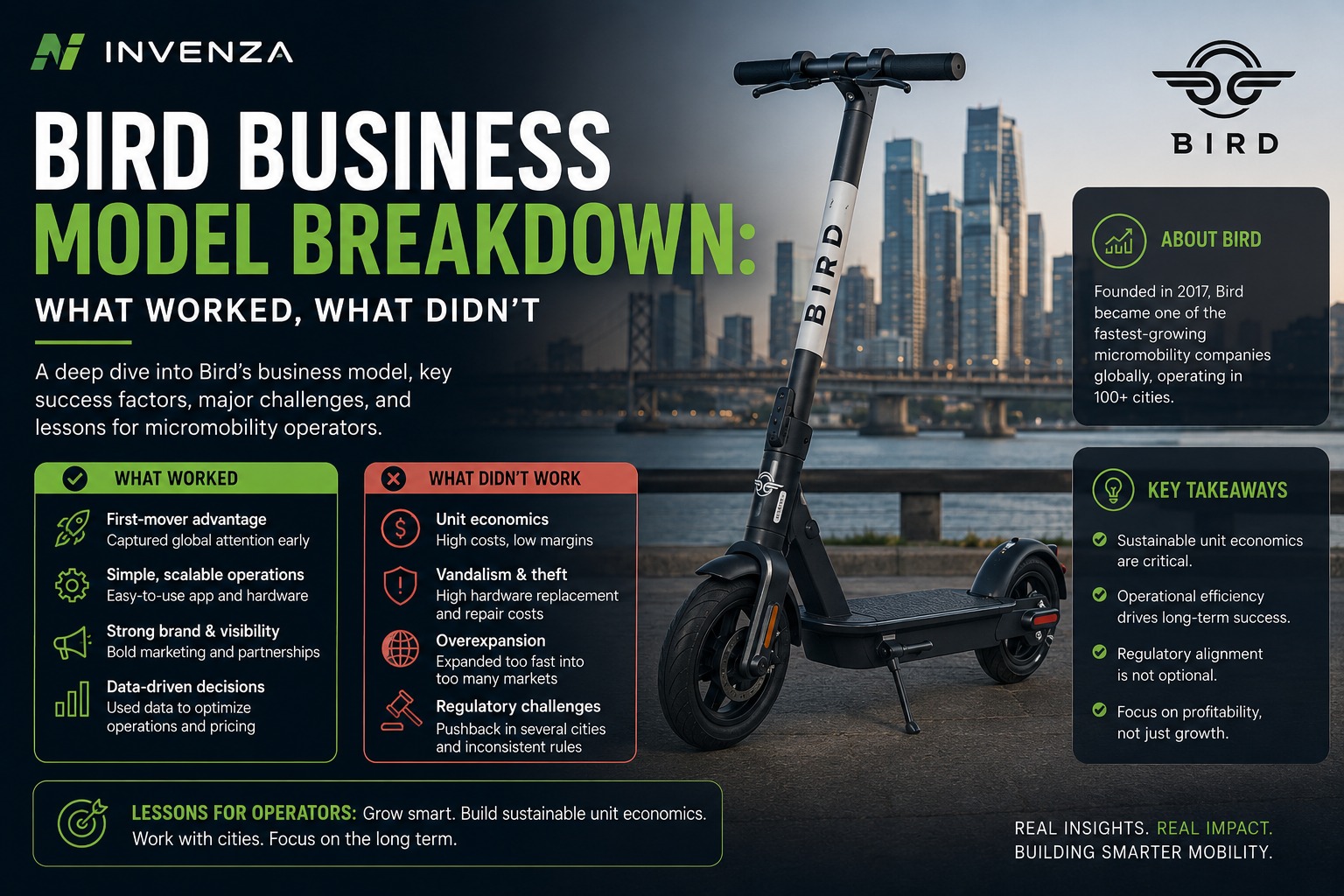
- Unit economics that never worked. Bird consistently lost money on every ride. Maintenance costs, vandalism, battery replacement, and rebalancing ate margins that revenue couldn’t cover.
- Over-reliance on VC funding. When interest rates rose and investors shifted priorities in 2022, the capital tap closed. Bird had no path to profitability.
- Regulatory backlash. Cities that had initially welcomed Bird grew frustrated with parking violations and accidents. Several major cities reduced or eliminated Bird’s permitted fleet size.
- COVID-19. The pandemic devastated ride volumes at exactly the wrong moment for a cash-heavy, revenue-light business.
- Hardware depreciation. Early Bird scooters had lifespans of 3–6 months in real-world conditions. Replacement costs were brutal.
“Bird raised over $750 million and still couldn’t make the unit economics work. That’s not a funding problem — it’s a business model problem.”
What Worked — and Still Works for Others
Despite the failure, Bird proved several things that remain true for the industry:
- Demand for shared scooters in urban areas is real and durable
- White-label / franchise models can expand reach with lower capital
- Per-minute pricing drives high frequency usage among core riders
- Corporate accounts and subscription plans significantly improve LTV
Lessons for Today’s Operators
- Know your unit economics before you scale — not after
- Don’t build a business model that requires unlimited VC to survive
- Hardware quality directly determines operational profitability
- Work with regulators from day one — the aggressive launch strategy has an expiry date
- Market size matters less than market profitability